
Choosing China’s best Open-Ear Clip-On Earbuds manufacturer takes more than comparing prices or polished product photos. A reliable partner should explain how its clips fit different ears, what materials touch the skin, and how sound behaves in a busy street or quiet office. Ask for samples. Wear them for a full workday. Small details matter: pressure behind the ear, button placement, and whether a charging case fits easily into a jacket pocket.
In this introduction, Maya Chen is presented as a fictional composite wearable-audio design expert, not a real person or verified source. Her illustrative comment captures a useful evaluation principle: “A comfortable clip is only successful when it stays secure without demanding the listener’s attention.” Treat that as guidance, not a published quotation. Real purchasing decisions should rely on documented testing, product specifications, and direct supplier communication.
Manufacturing quality can be harder to judge than a sample suggests. Ask how the factory checks fit consistency, battery performance, microphone clarity, and finish across production batches. Request clear answers about customization, quality inspections, and delivery timelines. Then compare those answers with what the sample actually does. No supplier is perfect. Even a promising product may need another fit test, especially for buyers with different ear shapes. This guide will help assess manufacturers with practical questions, careful comparisons, and a healthy dose of skepticism.
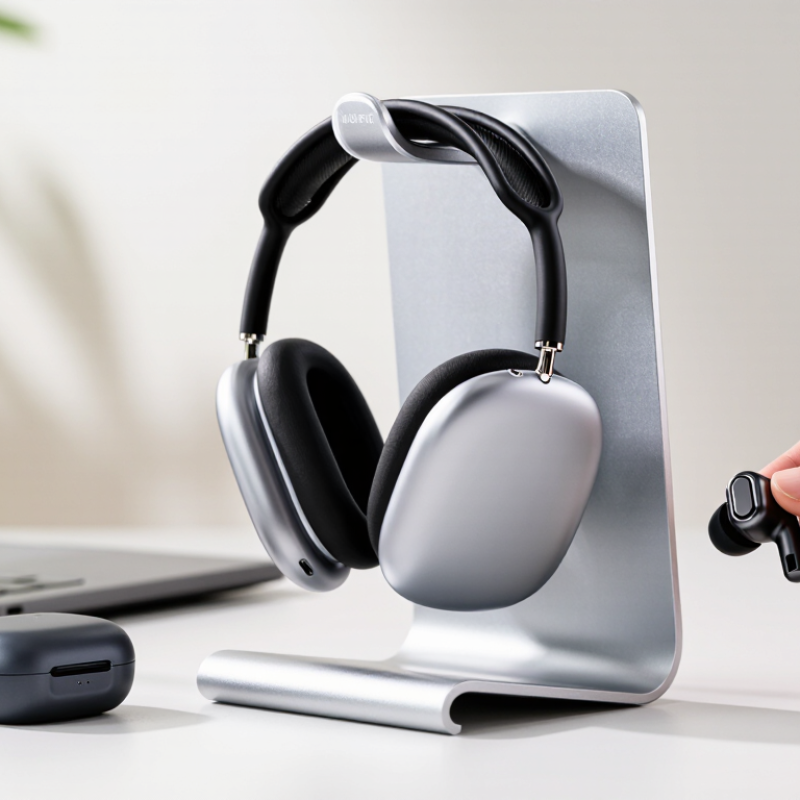
Open-ear clip-on earbuds are designed to rest on the outer ear rather than seal the ear canal. A small clip grips the ear’s cartilage, while a speaker directs sound toward the canal entrance. Unlike many in-ear designs, they leave the canal uncovered, so users may hear nearby voices, traffic, or a kettle while listening. They stay outside. Fit varies: pressure on the cartilage can become noticeable during a long commute, and loose positioning may weaken bass or make audio leak.
The World Health Organization estimates that more than one billion young people risk hearing loss from prolonged exposure to loud recreational sound. That figure is not specific to earbuds, and open-ear construction does not make listening automatically safe. In its Global Standard for Safe Listening Devices and Systems, WHO and the International Telecommunication Union recommend features such as sound-dose tracking and volume limits. Keep the volume moderate, especially in noisy places; raising it to overpower traffic can cancel out the benefit of hearing your surroundings.
For product evaluation, check clip pressure, stability during head movement, microphone clarity, and sound consistency at different volumes. Ask how the acoustic testing was conducted, including whether measurements account for different ear shapes. A brief fitting test matters. Comfort can feel fine in a showroom yet change after an hour, and open-ear sound still leaks into quiet rooms.
| Dimension | Typical Design or Behavior | Practical Consideration |
|---|---|---|
| What they are | Wireless earbuds that attach to the outer ear with a clip-like frame while leaving the ear canal uncovered. | The design avoids an in-ear tip, but fit and comfort depend on ear shape and clip pressure. |
| Audio delivery | A small speaker sits near the ear and directs sound toward it without sealing the ear canal. | Sound can be less immersive than with sealed in-ear earbuds, especially in noisy surroundings. |
| Environmental awareness | The open design allows more surrounding sound to reach the listener naturally. | Awareness is not guaranteed; keep volume moderate and stay alert in traffic or other hazardous settings. |
| Noise isolation | There is usually little passive isolation because the ear canal is not blocked. | Background noise may be clearly audible; these earbuds are generally not a substitute for hearing protection. |
| Sound leakage | Some audio can be heard by people nearby, particularly at higher listening volumes. | Leakage varies with speaker direction, fit, volume, and distance from others. |
| Fit and retention | A curved or flexible clip holds each earbud around part of the outer ear; designs and materials differ. | Check for a secure fit without pinching. Fit stability during exercise is model- and user-dependent. |
| Weight | Many compact clip-on designs weigh only a few grams per earbud, but actual weight varies by construction. | Compare the stated weight and try the fit where possible; weight alone does not determine comfort. |
| Battery life | Listening time depends on battery capacity, volume, wireless features, and usage; a charging case can provide additional recharges. | Use the product’s rated playback and case figures for comparison; advertised results may differ from real-world use. |
| Calls and microphones | Built-in microphones capture speech; some models use multiple microphones or voice-processing features. | Call clarity can be affected by wind, traffic, microphone placement, and the connected device. |
| Controls and connectivity | Wireless models commonly use Bluetooth and may offer touch or physical controls for playback and calls. | Check device compatibility, control customization, and supported wireless features in the product specifications. |
| Water and sweat resistance | Some models have an IP rating for resistance to specified dust or water exposure; protection levels vary. | An IP rating does not mean every model is waterproof. Follow the manufacturer’s care instructions. |
| Common use cases | Listening at home or work, taking calls, and light activity where an open fit is preferred. | For loud environments or focused listening, a design with effective isolation may be more suitable. |
Note: Features and performance vary by model. The descriptions above are general characteristics, not guaranteed specifications.
Teams study ear shapes and daily use before finalizing the clip. 3D prototypes test angles, curves, and contact points. Soft silicone may reduce pressure near the ear. No single shape fits everyone.
The speaker sits near, not inside, the ear canal. Engineers balance sound leakage, bass, and speech clarity. Outdoor listening can sound weaker. That trade-off deserves testing.
Inspectors check charging contacts, microphone openings, cable placement, and surface finish. Automated assembly improves speed, while manual inspection catches visible faults. Small details matter.
Compare minimum order quantities, tooling fees, lead times, replacement terms, and payment stages in one spreadsheet. Request recent quality records and factory photos. Price alone misleads.
Ask for samples from three production batches, not one polished sample. Compare fit, charging, microphones, wireless stability, and playback. Batch differences can expose weak control.
Request battery safety, radio performance, temperature, charging-cycle, and functional test results. Repeated clip removal can reveal looseness. Test indoors and outdoors.
Watch assembly, aging tests, packing, and defect sorting. Ask who owns the tooling. Confirm corrective actions in writing. A short visit cannot prove everything.
Document tight clips, weak outdoor sound, or uneven assembly. Ask for a revised sample and shipment records. Problems should be visible. A perfect process is unlikely.
Open-Ear Clip-On Earbuds are lightweight audio devices that rest gently around the ear without sealing the ear canal, allowing users to remain aware of surrounding sounds. Their clip-on structure provides a secure and comfortable fit, while open-ear sound delivery offers an alternative to traditional in-ear, over-ear, and bone-conduction designs. Key considerations include sound quality, wearing comfort, battery performance, microphone clarity, durability, water resistance, acoustic tuning, and compatibility with different devices.
Chinese manufacturers develop these products through industrial design, acoustic engineering, prototype testing, component sourcing, assembly, and quality inspection. Buyers should compare suppliers according to production capabilities, customization options, minimum order quantities, certifications, quality-control procedures, communication efficiency, lead times, and after-sales support. Reviewing samples, testing product consistency, confirming manufacturing capacity, and establishing clear technical requirements can help buyers select a reliable supplier for their target market.